
intentional & authentic marketing in 2026
There’s no doubt the online space has become relentlessly busy. Remember when there was an actual end to your instagram feed? And when there was no such thing as an explore page?
What bliss.
Over time, platforms have increasingly prioritised tailored ads and influencer content over posts from friends - subtly shifting online spaces away from connection and towards consumption. Add to that the rapid rise of AI-generated content, and it;s no surprise that feeds feel fuller than ever, and harder to cut through.
As we move into 2026, we’re seeing people respond in two clear ways:
Using technology with intention
Seeking out authentic voices and experiences
As audiences shift their behaviours, brands and marketing will inevitably follow. It’s something we’re genuinely excited to see unfold, and to be part of, over the year ahead.
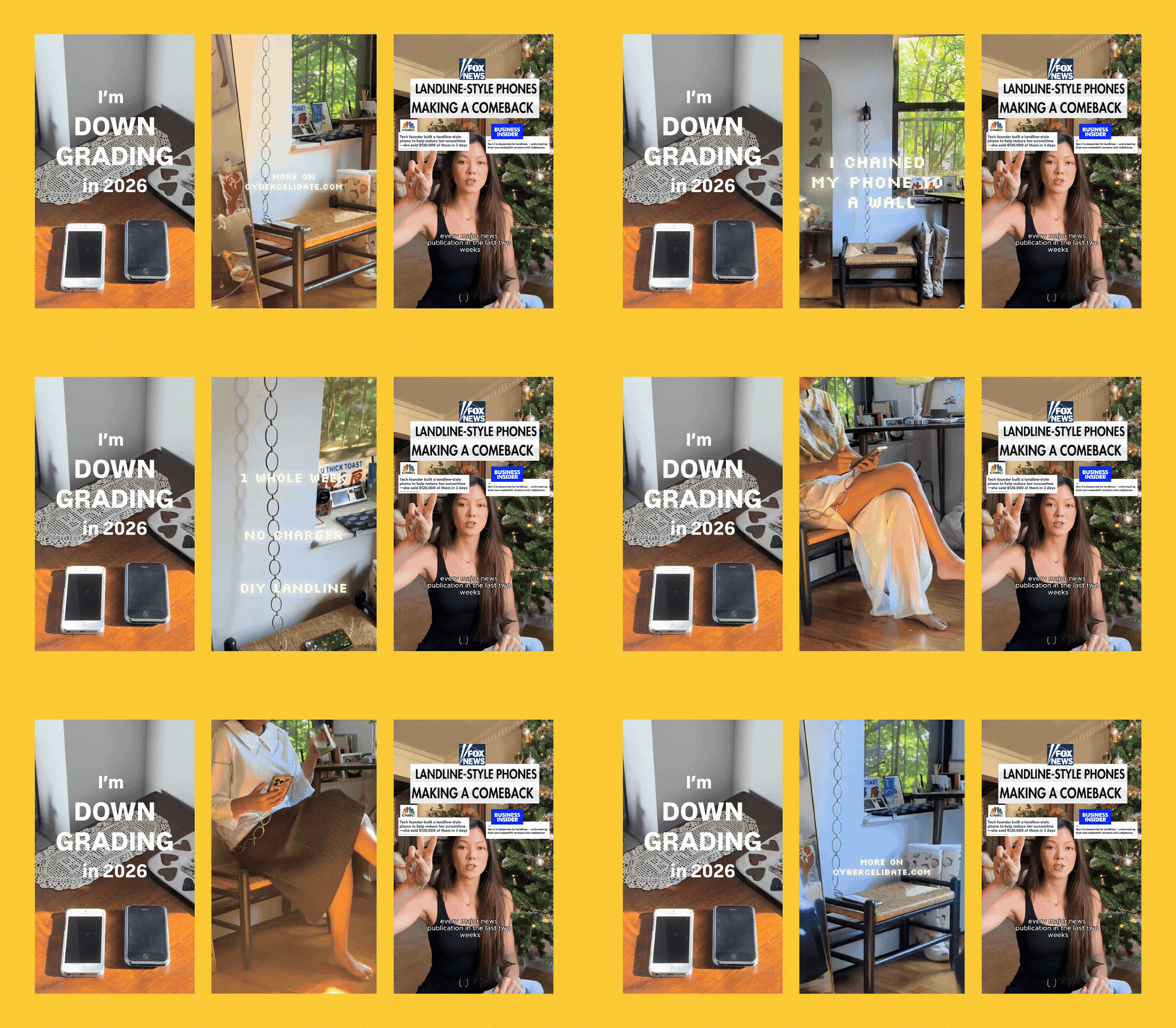
using technology with intention
Interestingly, this shift isn’t just showing up in the content we consume, it’s influencing how people interact with technology itself.
From anchoring phones to one spot in the house to rethinking screen time altogether, more people are questioning not just what tools they use, but how and why they use them.
The same thinking applies to marketing.
We’re not anti-AI by any stretch of the imagination. Used thoughtfully, AI tools can complement creativity, support production and unlock genuinely exciting ideas. Where challenges arise is when tools are adopted without a clear purpose. When intention drops away, audiences notice.
As Maisie McCabe puts it: “The industry should be mindful not to enshittify the whole of advertising through its adoption of AI technology.”
Authentic voices
Authenticity is a slippery concept. It’s talked about constantly, but often reduced to a look consisting of handheld footage, unpolished edits, “real” moments carefully staged to feel spontaneous.
What people are really craving isn’t roughness or imperfection, but sincerity. Stories that feel considered rather than manufactured. Experiences that invite participation, not performance. A sense that there are real people behind the message, not just systems optimised for reach.
That’s why we’re seeing renewed interest in campaigns built around real interaction, physical spaces and shared experience, moments that can’t be endlessly controlled or replicated. The boom of run clubs across the UK echoes gen-z’s need for connection and offline experiences. People want to gain something of depth and value rather than feeling ‘sold to’.
what this means for marketers
As we move through 2026, the brands that resonate most won’t necessarily be the loudest or fastest, they’ll be the ones that feel considered, human, and clear in their intent.
Here are a few principles we’re keeping in mind:
Start with the story, not the tool
Be clear on what you’re trying to communicate and why it matters before deciding how it’s made.Use technology to support craft
AI can speed up workflows, unlock ideas, and remove friction, and it works best when guided by human judgement and taste. Do your research and apply the best tool for the job.Design for participation, not just reach
Consider how audiences might engage, respond, or gain something of lasting value, rather than simply consume and move on.Embrace moments that can’t be fully controlled
Real interaction, physical spaces, and live experiences introduce unpredictability, which is often the very thing that makes work feel alive.Optimise for trust over metrics
Attention is fleeting. Credibility and kindness lasts longer.