
The art of the hook
Grabbing and maintaining the attention of your audience can sometimes seem like a dark art.
Attention isn’t just short, it’s slippery. Those first few seconds are less “once upon a time” and more “blink and you’ll miss the rabbit disappearing into the hat.” If the viewer flinches, you’ve lost them. That’s where hooks come in.
Not the shouty “WAIT FOR IT!!!!” ones. We’re talking about the elegant, visual, quietly irresistible kind. The ones that whisper:
“…hold on. What am I looking at? Could I learn something here?”
Here’s our guide to grabbing attention with video in 2026. We’ll take a look at five types of hooks creators are using everywhere, from UGC-style reels to high-budget brand ads - and how to make them work for your own videos.
the unexpected visual
The absolute classic example of the unexpected visual would be the Cadbury’s 2007 classic. You know the one, featuring everyone’s favourite musical gorilla. You go in expecting chocolate. Or at least something food based. Instead: a gorilla, drumming.
That close-up on a face you’d never expect and there’s the hook! No product. No explanation. Just one strange, brilliant image that pulls your curiosity forward.
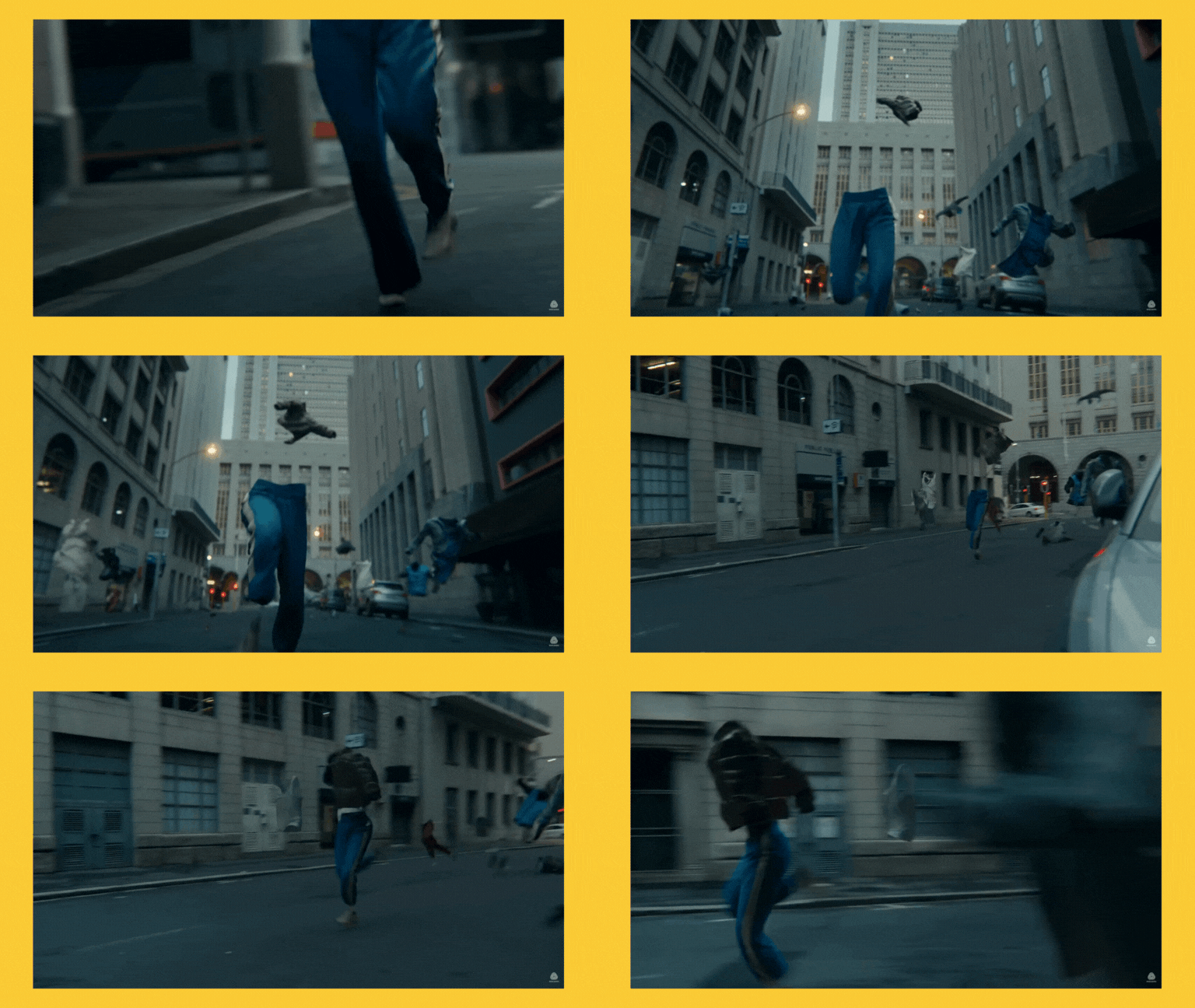
But I’m sure you’ve read about that ad more than enough times. to give a newer example, here’s an ad from Woolmark that we loved. Woolmark grabs attention in the first second: clothes sprinting across the landscape with no humans inside them. It’s strange enough to make you pause and wonder.
That moment of “hold on… what am I watching?” creates just enough curiosity for their message to land: Wear Wool, Not Waste. The visual surprise opens the door; the idea steps through.
2. BOLD TEXT
Text hooks work because they meet viewers where their attention actually is. Often skimming, scrolling, half-watching with their thumb hovering over the feed. And often, they’re doing it in silence.
A huge share of people watch video on mute: 79% of in-feed videos on LinkedIn, and around 75% on Facebook. That makes on-screen text less of a nice-to-have and more of a survival tool. A few well-chosen words give instant context, set up a promise, or spark a question the brain can’t help but answer. They’re a headline and a visual anchor rolled into one, which is especially powerful when you’re dealing with complex ideas.
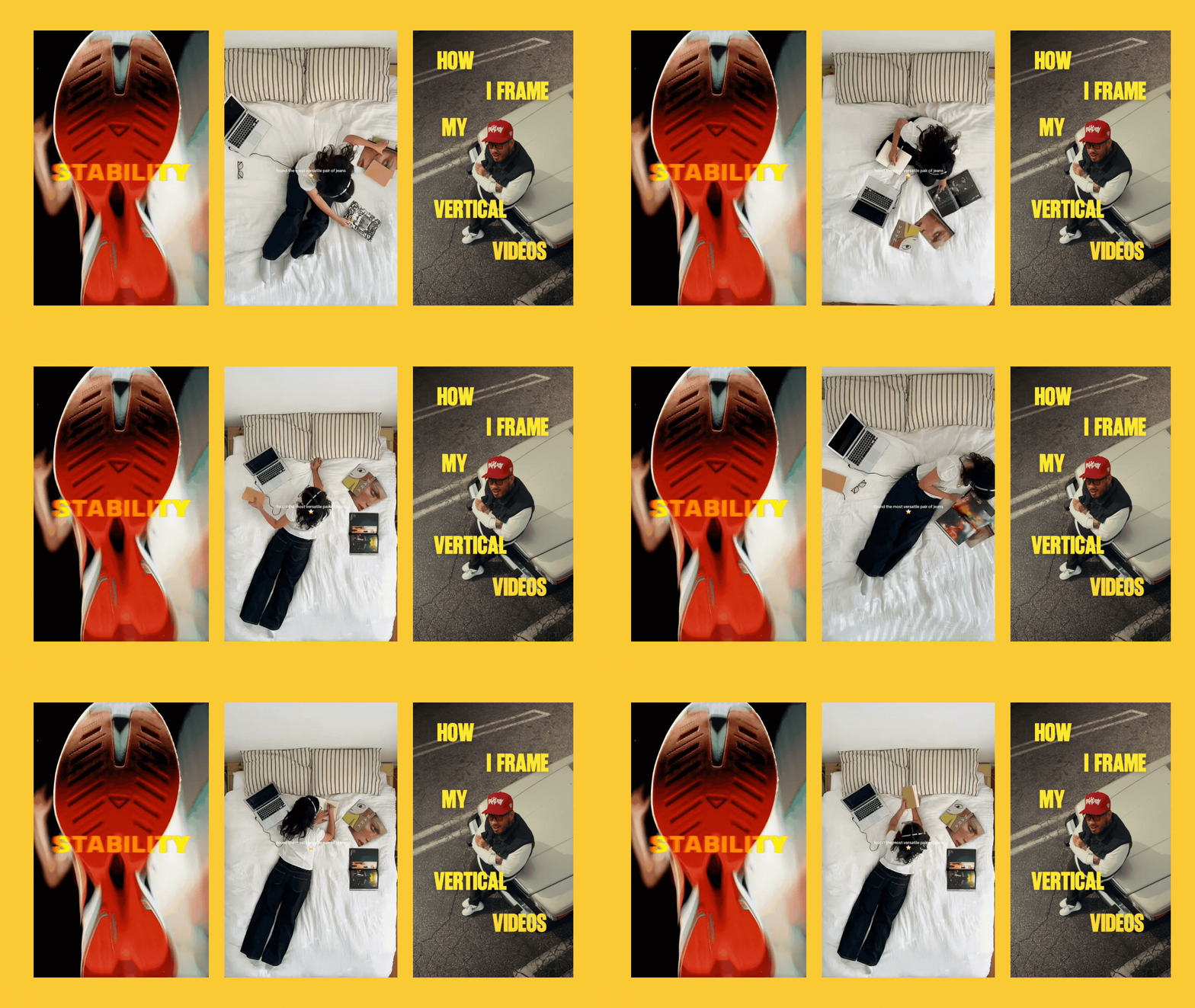
This ad by Salomon Running adeptly weaves text into the reel using clever lightling, maintaining the viewer’s attention throughout, without the need for sound.
3. whacky angles
Whacky angles work on social for the same reason a tilted picture frame makes you stop and straighten your head. They disrupt the pattern. Feeds are full of perfectly level faces, eye-line shots, and safe compositions, so the moment a camera comes in low, too close, off to the side, or slightly unhinged, the brain clocks it as different.
That split second of visual friction is gold on social. It signals energy, personality, and intent before a single word is said. More importantly, it feels native to the platform, like something captured in the moment, not polished into submission and shot using the same tripod setup as everyone else, ever. Used well, unusual angles don’t just look cool, they buy you attention long enough for the story to sneak in and do its job.
A recent trend saw brands and creators shooting from birds eye view as though the camera was attached to the ceiling, advertising clothes in a way that disrupted the feed, whilst still feeling candid and natural.
4. pain points
Sometimes it’s as simple as holding up a mirror to what your audience is already feeling: the video that took ages to make and sank without a trace, the message that matters but never quite lands, the sense that everyone else has cracked social except you.
When a hook starts there, it doesn’t feel like marketing. It feels like recognition, and recognition is powerful. It creates momentum, trust, and a reason to keep watching, because now the viewer isn’t wondering why they should care. They already do. You’ve articulated the itch, and that’s the moment people stick around to see if you can scratch it.
5. Honorable mention: rage bait
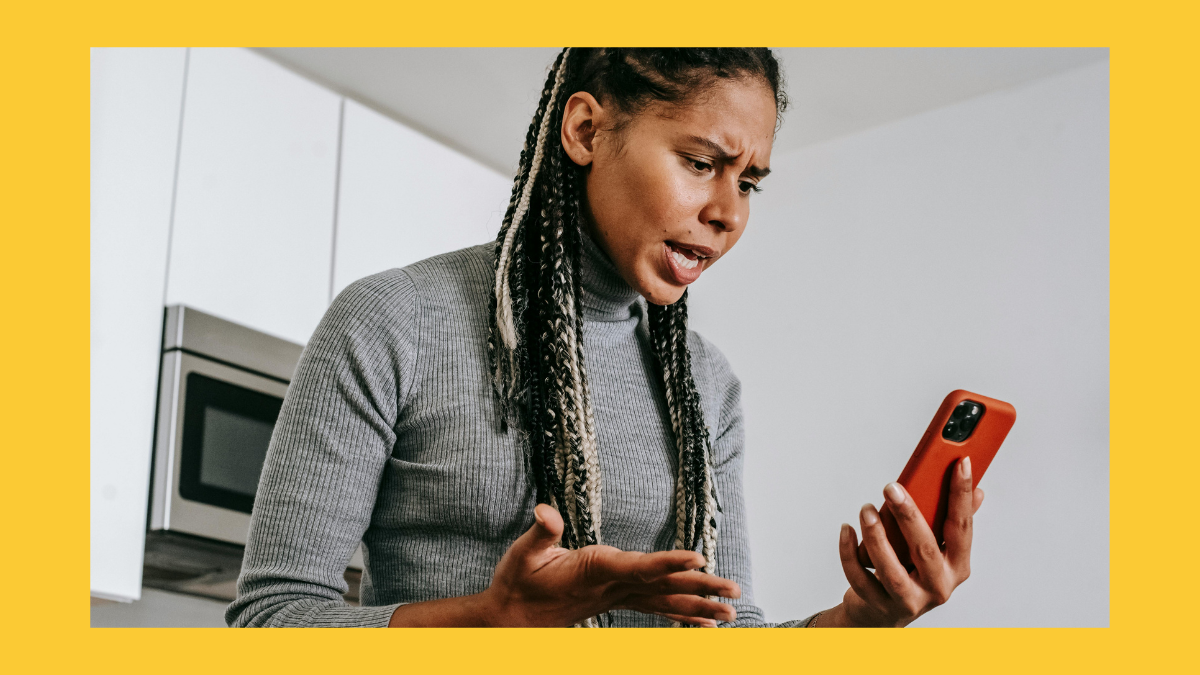
We can’t ignore the fact that Oxford University Press has named ‘Rage bait’ as the 2025 word of the year.
At its core, rage bait is manipulative content that presents a strong, often oversimplified or deliberately skewed take, knowing full well it’ll trigger disagreement.
And that’s exactly why it works. Anger is a high-energy emotion, it overrides scrolling autopilot and compels people to stop, watch, comment, and share, usually to say “this is wrong”. Platforms love that kind of engagement, so the algorithm rewards it, pushing the video further into the feed. Used clumsily, rage bait can feel cheap or cynical. Used knowingly, it taps into a deeper truth about social: people are more likely to engage when something challenges their identity, expertise, or beliefs.
If you do decide to venture into the realm of ragebait, it’s important to tread very carefully, as it can very quickly erode trust.
SO, WHAT MAKES A GOOD HOOK REALLY WORK?
So, what makes a good hook really work? Annoyingly (and reassuringly), there’s no single answer. It’s rarely a lightning bolt of genius and much more often a process of testing, tweaking, and seeing what actually earns that first second of attention.
What works for one audience, platform, or moment might fall flat in another. That’s why hooks are less about perfection and more about experimentation. Try the unexpected visual. Play with text. Tilt the camera. Name the pain. Even play with rage bait, where appropriate.
Each attempt teaches you something. And over time, those small lessons add up to a sharper instinct for what makes people stop, look, and lean in.